
Japan is a country where the future and the past exist in perfect, dizzying harmony. In the span of a single afternoon, you can ride a high-speed bullet train slicing through skyscraper-studded valleys, only to step off into a quiet mountain village where steam rises from mineral hot springs and shrines stand surrounded by thousand-year-old cedar trees. For first-time visitors, planning a trip here can feel like trying to translate a complex, beautiful language. This guide serves as your entry point, detailing the essential logistics, top destinations, and cultural codes that will help you navigate this fascinating island nation.
Essential Logistics: Visas, Connectivity, and Train Travel
Most travelers from Western nations enjoy visa-free entry to Japan for tourism stays up to 90 days. When preparing for arrival, the most important logistical details are connectivity and local transit. While Japan is highly technological, it is still surprisingly reliant on cash for small transactions, vending machines, and temple entry. Make sure to withdraw local Japanese Yen (JPY) upon arrival, preferably using ATMs inside convenience stores like 7-Eleven or FamilyMart, which offer low fees and high reliability.
For internet access, renting a pocket Wi-Fi router or purchasing an eSIM before you land is absolutely essential. Google Maps will be your lifeline for navigating the extremely complex train systems of cities like Tokyo and Osaka. Speaking of trains, while the classic nationwide JR Pass has increased significantly in price, regional passes or simply loaded transit IC cards (like Suica, Pasmo, or Icoca) remain the easiest ways to travel on subways and regional lines.
🚀 Logistics Tip: Suica/Pasmo IC Cards
You can easily add a digital Suica or Pasmo card directly to your Apple Wallet or Android equivalent. This allows you to tap in and out of train stations and pay at convenience stores without carrying physical plastic. For more details on traveling affordably, check out our Japan Budget Guide.
Choosing Your Destinations: The Golden Route and Beyond
For a first-time trip, the 'Golden Route' is the classic path. Starting in Tokyo, you will experience the neon skyscrapers, pop culture alleys of Akihabara, and the historic atmosphere of Asakusa. From there, you head to Hakone or Kawaguchiko to view the majestic Mount Fuji and soak in traditional hot springs (onsen). The journey continues to Kyoto, the cultural heart of Japan filled with geishas, temples, and zen gardens, and finally ends in Osaka, a vibrant city celebrated for its street food culture and nightlife.
If you want a detailed, step-by-step breakdown of how to sequence this classic route, explore our comprehensive 10-Day Japan Itinerary.

Planning Your Timing: Cherry Blossoms, Festivals, or Autumn Colors
Japan experiences four distinct, highly pronounced seasons, each bringing a dramatic transformation to the landscape. Choosing when to visit Japan involves deciding which version of the country you want to experience. Whether it is the soft pastel pink of spring cherry blossoms, the vivid fiery orange of autumn maples, or the crisp snow-capped peaks of winter, each season offers a unique lens on this ancient archipelago.
To see which season fits your travel style, check out our detailed guide on the Best Time to Visit Japan.
The Big Cities: Tokyo & Kyoto
Tokyo and Kyoto are the two main poles of a classic Japanese journey. Tokyo is a massive constellation of distinct neighborhoods, each with its own character, style, and history. In the west, Shibuya and Shinjuku showcase the cutting-edge fashion, giant neon screens, and bustling nightlife of modern Japan. In the east, neighborhoods like Asakusa and Yanaka retain a retro, wooden-architecture atmosphere.
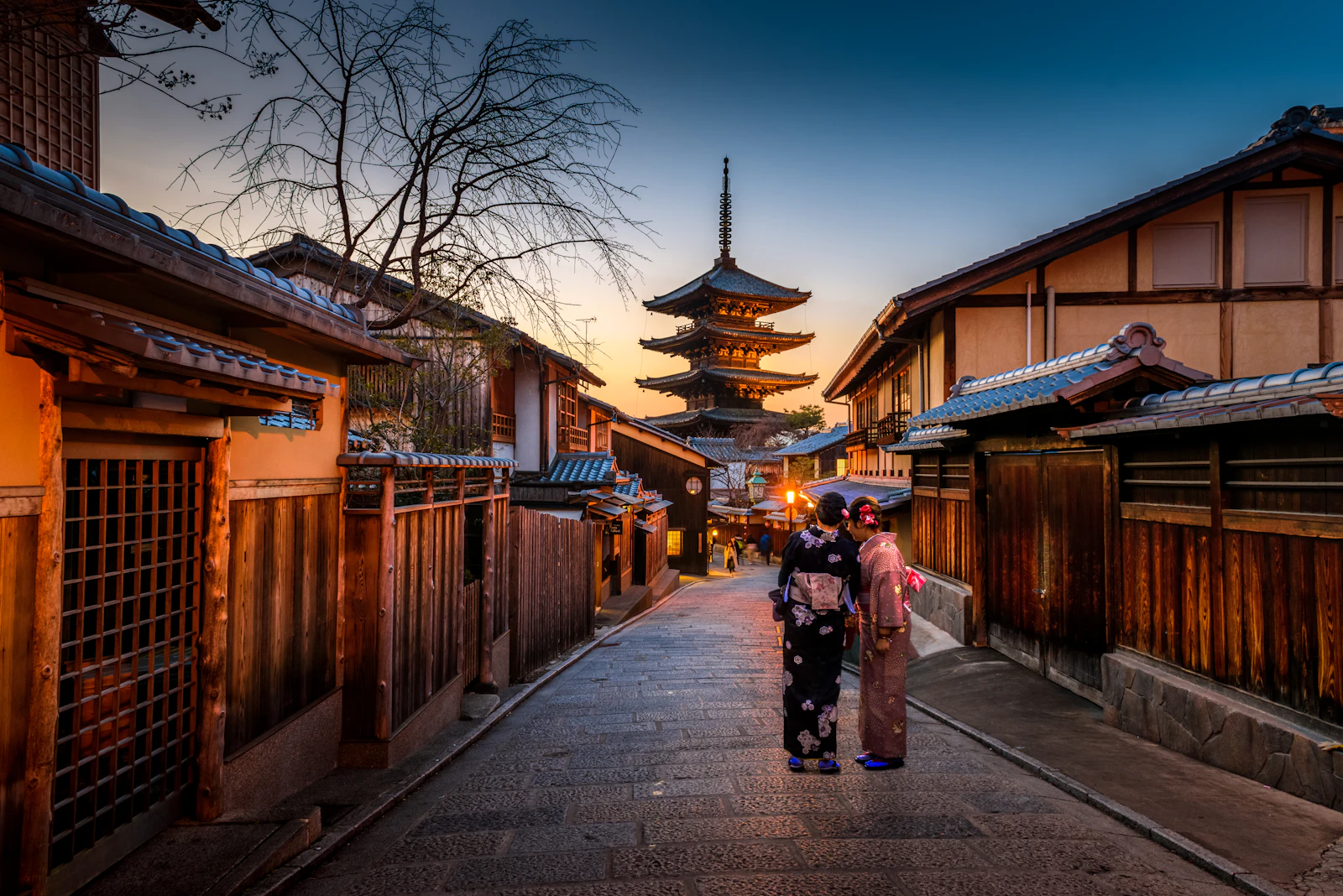
Kyoto, on the other hand, is the repository of Japan's soul. Spared from the destruction of World War II, the city retains thousands of classical Buddhist temples, Shinto shrines, wooden townhouses (machiya), and imperial palaces.
To plan your details in each destination, check our dedicated Tokyo Travel Guide and our Kyoto Travel Guide.
Gastronomy & Local Flavors
Food is a pillar of any trip to Japan. Osaka has a vastly different energy—louder, friendlier, and completely focused on good food. Local culture here is defined by 'kuidaore'—a humorous word that translates to 'ruin yourself by eating' or 'eat until you drop.' The city is the birthplace of some of Japan's most famous snacks, cooked over sizzling hot griddles on bustling street corners.
To find the best local griddle bites and restaurant recommendations, consult our Osaka Food Guide.
Cultural Etiquette: Showing Respect in Everyday Interactions
Japanese culture places a high emphasis on harmony and respect. A few simple rules will make your trip significantly smoother. First, tipping is not practiced in Japan. If you leave extra cash on a restaurant table, the staff will run down the street to return it. Instead, show your appreciation by saying 'Gochisousama deshita' (thank you for the feast) as you leave. Second, always remove your shoes when entering traditional accommodations (ryokan), temples, or homes. Look for the step up at the entrance, known as the genkan, where shoes should be left.
“In Japan, travel is a lesson in mindfulness. Every bow, every carefully placed bowl, and every quiet train ride is an invitation to slow down and notice the details.”— Liam Sterling