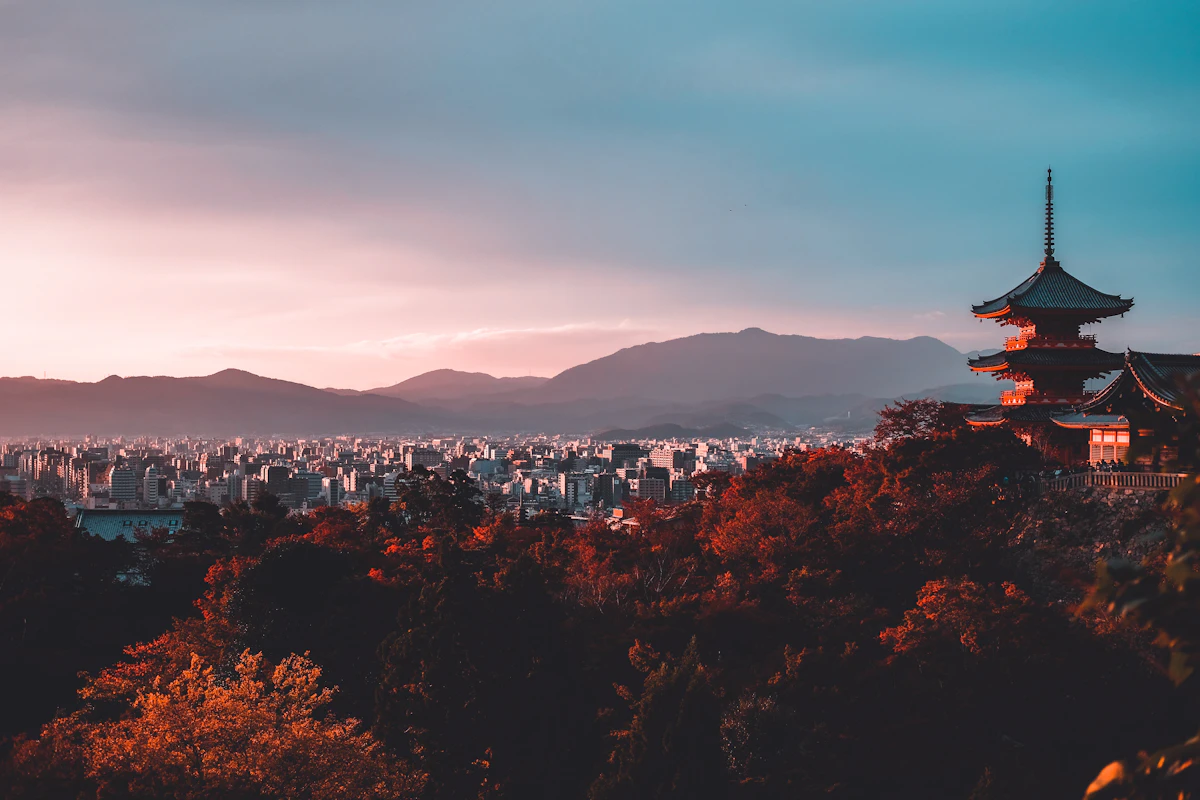
Kyoto is the repository of Japan's soul. Spared from the destruction of World War II, the city retains thousands of classical Buddhist temples, Shinto shrines, wooden townhouses (machiya), and imperial palaces. With 17 UNESCO World Heritage sites within city limits, Kyoto is arguably the greatest concentration of cultural heritage in the world. It is a city designed for quiet exploration: walking along stone pathways where moss climbs up lantern bases, listening to the wind rattle through bamboo stalks, and drinking matcha tea on tatami mats overlooking perfectly raked gravel gardens. Kyoto is not a city you rush — it is a city you inhabit.
Fushimi Inari-Taisha: The Mountain Path of Ten Thousand Torii Gates
Fushimi Inari is Kyoto's most iconic Shinto shrine, dedicated to Inari, the god of rice, agriculture, and business. The shrine complex spreads across the wooded slopes of Mount Inari, featuring a path of over ten thousand bright orange torii gates, each donated by a Japanese business or individual as an offering for good fortune. The lower paths near the main shrine buildings are heavily crowded throughout the day, but if you hike up past the Yotsutsuji intersection (about 40 minutes from the base), the crowds thin dramatically. Above this point, the atmosphere becomes genuinely otherworldly: the dense cedar forest presses in on both sides of the vermilion tunnel, stone fox (kitsune) statues covered in velvety green moss peer out from niches, and the only sounds are your footsteps and the occasional crow.
The full hike to the summit of Mount Inari and back takes approximately 2.5 to 3 hours. The trail circles the entire mountain and passes through small shrine outposts, each with its own clusters of miniature torii and offerings of sake and rice. Visit at dawn (the shrine never closes) or on a weekday evening as sunset light filters through the orange gates in amber waves.
Zen Temples and Rock Gardens: Ryoan-ji, Kinkaku-ji, and Ginkaku-ji
Kyoto is home to world-renowned zen temples that have shaped Japanese aesthetics for centuries. Ryoan-ji features the country's most famous karesansui (dry landscape rock garden), consisting of fifteen stones arranged on a bed of raked white gravel in a precise, ambiguous composition. The mystery is intentional: all fifteen stones cannot be seen simultaneously from any vantage point along the viewing veranda, a puzzle that Zen practitioners have contemplated for 500 years. A short bus ride away is Kinkaku-ji (The Golden Pavilion), a Zen temple whose top two floors are completely covered in pure gold leaf, reflecting in brilliant gold and green on the surrounding Mirror Pond. For a quieter alternative, visit Ginkaku-ji (The Silver Pavilion) in Higashiyama, surrounded by a sculptural sand garden and a path that winds into the forested hills.

Arashiyama: Bamboo Groves, Monkey Parks and River Valleys
The Arashiyama district in western Kyoto is one of the city's most dramatic landscapes. The famous Bamboo Grove stretches for several hundred meters, the towering canes pressing tightly together to form a living green cathedral. Sound changes entirely inside the grove — the wind produces a deep, resonant rustling that UNESCO has recognized as one of Japan's top 100 soundscapes. Beyond the bamboo, the Tenryu-ji temple features a National Special Historic Site garden with a central pond reflecting Arashiyama's forested hillsides. A traditional wooden bridge (Togetsukyo) spans the Oi River, and on the hillsides above sit the Iwatayama Monkey Park, where over 130 wild Japanese macaques can be observed at close range.
Gion District: Preserving the Heritage of Geiko and Maiko
Gion is Kyoto's famous traditional entertainment district, where Geiko (Kyoto dialect for Geisha) and Maiko (apprentice Geisha) still perform in exclusive wooden teahouses (ochaya). Walk down Shirakawa Canal or the historic Hanami-koji street in the evening, when paper lanterns illuminate the wooden facades, and you might hear the wooden click of geta sandals echoing on the stone paving. Hanamikoji is the most photogenic street in Kyoto, lined with traditional two-story wooden machiya that house exclusive ochaya. Most teahouses are accessible only by introduction through a regular patron, but the Gion Hatanaka ryokan occasionally arranges geiko performances for guests.
“Kyoto does not shout its beauty at you. It waits. Sit still long enough in one of its moss gardens, and the city will slowly, quietly reveal everything.”— Clara Vance
Kyoto Cuisine: Kaiseki, Tofu, and the Nishiki Market
Kyoto's culinary identity is as refined as its temple gardens. Kaiseki — Japan's elaborate multi-course haute cuisine — was perfected here, evolving from the simple meals served during tea ceremonies. A full kaiseki dinner at a traditional Kyoto restaurant (a ryotei) can run from ¥15,000 to ¥50,000 per person, but the experience is transformative: eight to twelve exquisite courses, each in a different vessel, each calibrated to the season's finest ingredients. For a more accessible introduction to Kyoto flavors, Nishiki Market (nicknamed 'Kyoto's Kitchen') is a narrow, 400-meter covered arcade with over 100 stalls selling pickled vegetables (tsukemono), grilled mochi on sticks, fresh tofu, sea urchin, and Kyoto-style sweets (wagashi). The market is also the best place to taste yudofu — Kyoto's beloved silken tofu simmered at the table in a light kombu broth.
Getting Around Kyoto: Buses, Bicycles and Day Trips to Nara
Kyoto's bus network is extensive and tourist-friendly — a one-day bus pass (¥700) gives unlimited access to the city's main sightseeing routes. Cycling is also excellent: the city is largely flat and many shops rent bicycles for ¥1,000–1,500 per day. For day trips, Nara is just 45 minutes from Kyoto by the Kintetsu limited express, and is home to Nara Park where over 1,200 free-roaming, bow-trained deer wander the grounds of the ancient Todai-ji temple, housing Japan's largest bronze Buddha statue. The Uji area, 20 minutes south, is famous as the birthplace of matcha green tea and the setting of the classic Genji Monogatari novel.
🚀 Kyoto Tip: Early Temple Runs
Temples like Kiyomizu-dera and Fushimi Inari open at 6:00 AM. Arriving at this time allows you to experience the shrines in silent, mist-shrouded solitude before the tour buses arrive at 9:00 AM. Kiyomizu-dera's wooden stage overlooking the forest valley is particularly beautiful in the early morning mist.